Radiesse Biostimulator in Grants Pass, OR: How It Restores Volume

Joyce Solar
RN - Cofounder/Master Injector
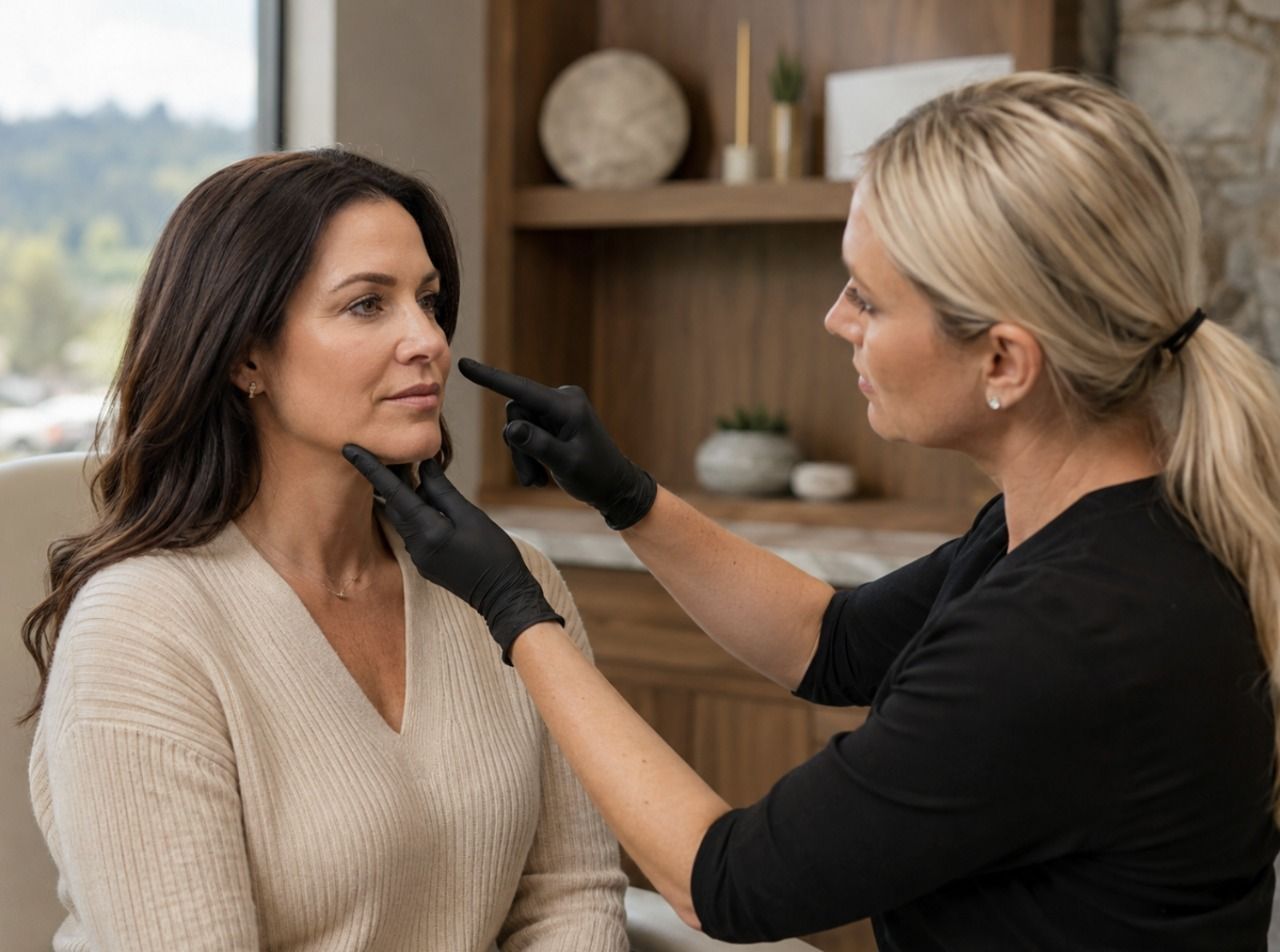
Facial aging is not always about wrinkles. Sometimes the bigger change is lost support. Cheeks can appear flatter, folds around the mouth may become more noticeable, and the lower face can lose some of its previous definition.
For patients who want to restore structure without looking obviously filled, Radiesse filler offers an option worth discussing. This injectable contains calcium hydroxylapatite, a material that can provide immediate support while also stimulating processes involved in collagen production.
At Southern Oregon Medical Aesthetics in Grants Pass, OR, treatment starts with your face, not a syringe count. We look at your facial structure, skin, areas of volume loss, and aesthetic goals before recommending a treatment plan. The goal is a refreshed, balanced appearance that still feels like you.
What You'll Learn From This Article
- How Radiesse restores volume and supports collagen production
- What makes calcium hydroxylapatite different from many traditional fillers
- Which concerns may be appropriate for Radiesse treatment
- How Radiesse compares with hyaluronic acid filler
- What to expect during treatment and recovery
- How long results may last
- What side effects and safety considerations to discuss before treatment
Understanding what is inside Radiesse makes it easier to see why providers may choose it for certain types of facial aging.
What Is Radiesse?
Radiesse is an injectable dermal filler made with calcium hydroxylapatite, commonly shortened to CaHA. The product contains smooth calcium hydroxylapatite microspheres suspended in a gel carrier.
The gel helps provide volume soon after the injection. The CaHA microspheres remain temporarily in the tissue and act as a scaffold around which collagen and other skin components can change.
A 2023 narrative review on calcium hydroxylapatite as a regenerative aesthetic treatment examined laboratory and clinical evidence involving CaHA. The authors reported findings related to collagen production, elastin, fibroblast activity, angiogenesis, and other extracellular matrix changes, while also noting differences in the strength and design of the available studies.
That distinction is important. Radiesse does not simply occupy space like an implant. The body gradually processes the carrier and CaHA particles, while the tissue response develops over time.
This combination of physical support and collagen stimulation is what separates Radiesse from fillers chosen mainly to add soft volume or precisely shape a small area.
How Does Radiesse Restore Facial Volume?
Radiesse works on multiple timelines. Part of the result comes from the material placed during treatment, while another part develops as the tissue responds.
Immediate Structural Support
Volume loss can change how the entire face looks. A fold may appear deeper because the surrounding tissue has less support. The jawline may seem softer. Areas that once looked smooth can cast different shadows as facial structure changes.
Radiesse can add physical support to appropriately selected areas. Depending on your anatomy and treatment goals, that may help restore volume, soften certain wrinkles and folds, or improve facial contour.
The goal is not necessarily to inject directly into every line.
Natural-looking filler treatment depends on seeing how different parts of the face relate to one another. In some cases, supporting an adjacent area can create a more balanced result than simply filling the deepest wrinkle.
Collagen Stimulation Over Time
The CaHA microspheres in Radiesse are also associated with collagen stimulation.
Collagen is one of the proteins that helps give skin structure and support. As the tissue responds to CaHA, new collagen formation may contribute to changes that develop gradually after the initial injection.
This is why Radiesse is often discussed as both a filler and a biostimulatory injectable.
Individual responses differ. Your age, skin quality, facial anatomy, product amount, placement technique, and treatment area can all influence the final result.
Knowing how Radiesse works is only part of the decision. The next question is where that type of support may make sense.
What Areas Can Radiesse Treat?
Radiesse is not a filler for every part of the face. Choose the product that matches the anatomy and treatment goal.
Facial Wrinkles and Nasolabial Folds
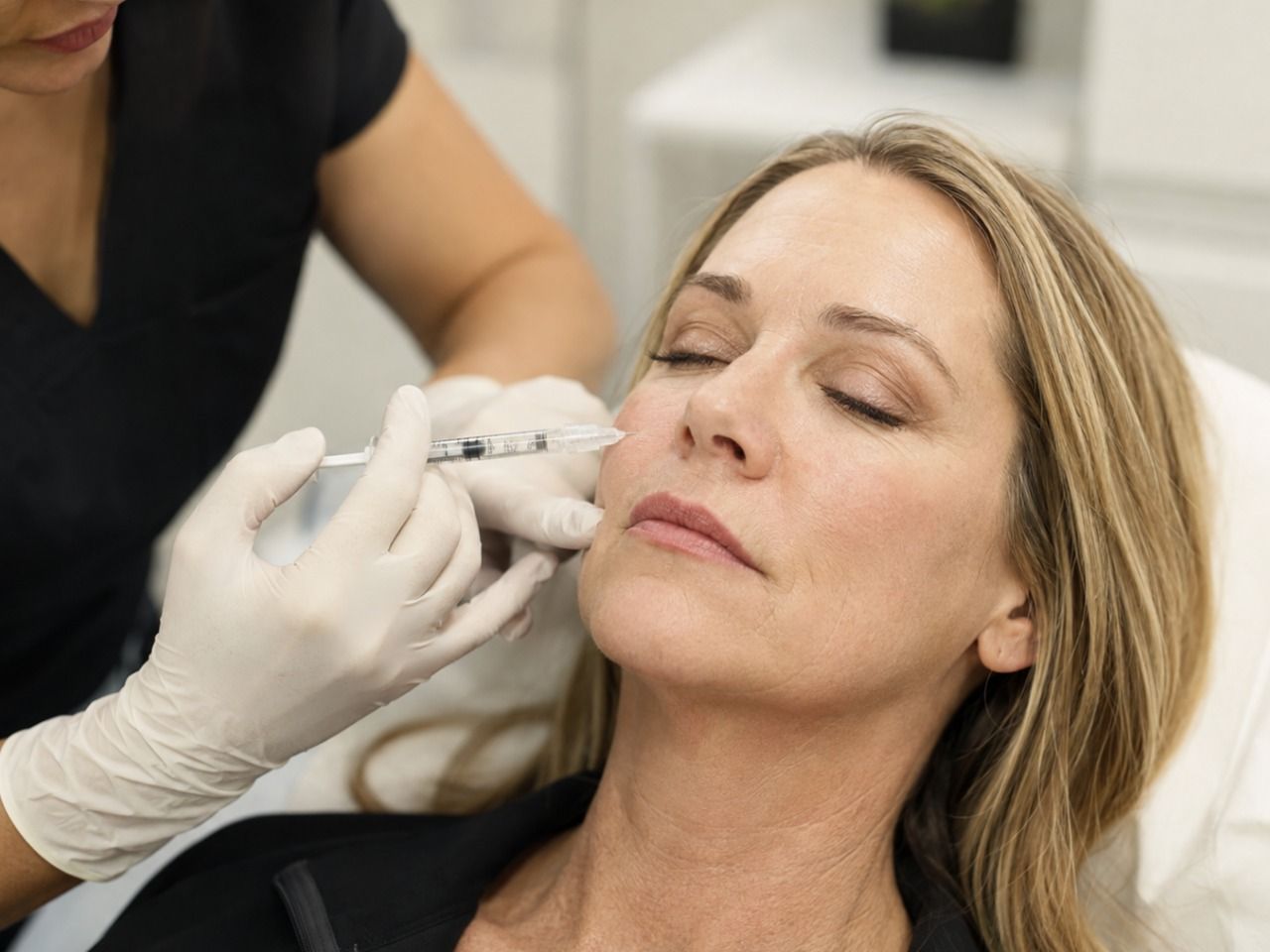
Radiesse has a history of use for moderate to severe facial wrinkles and folds, including nasolabial folds.
Nasolabial folds extend from the sides of the nose toward the corners of the mouth. These folds can become more noticeable as facial volume, skin elasticity, and structural support change.
Treatment may help smooth or soften an appropriate fold, but the goal should not be to remove every natural crease or eliminate normal facial movement.
Facial Contour and Structural Support
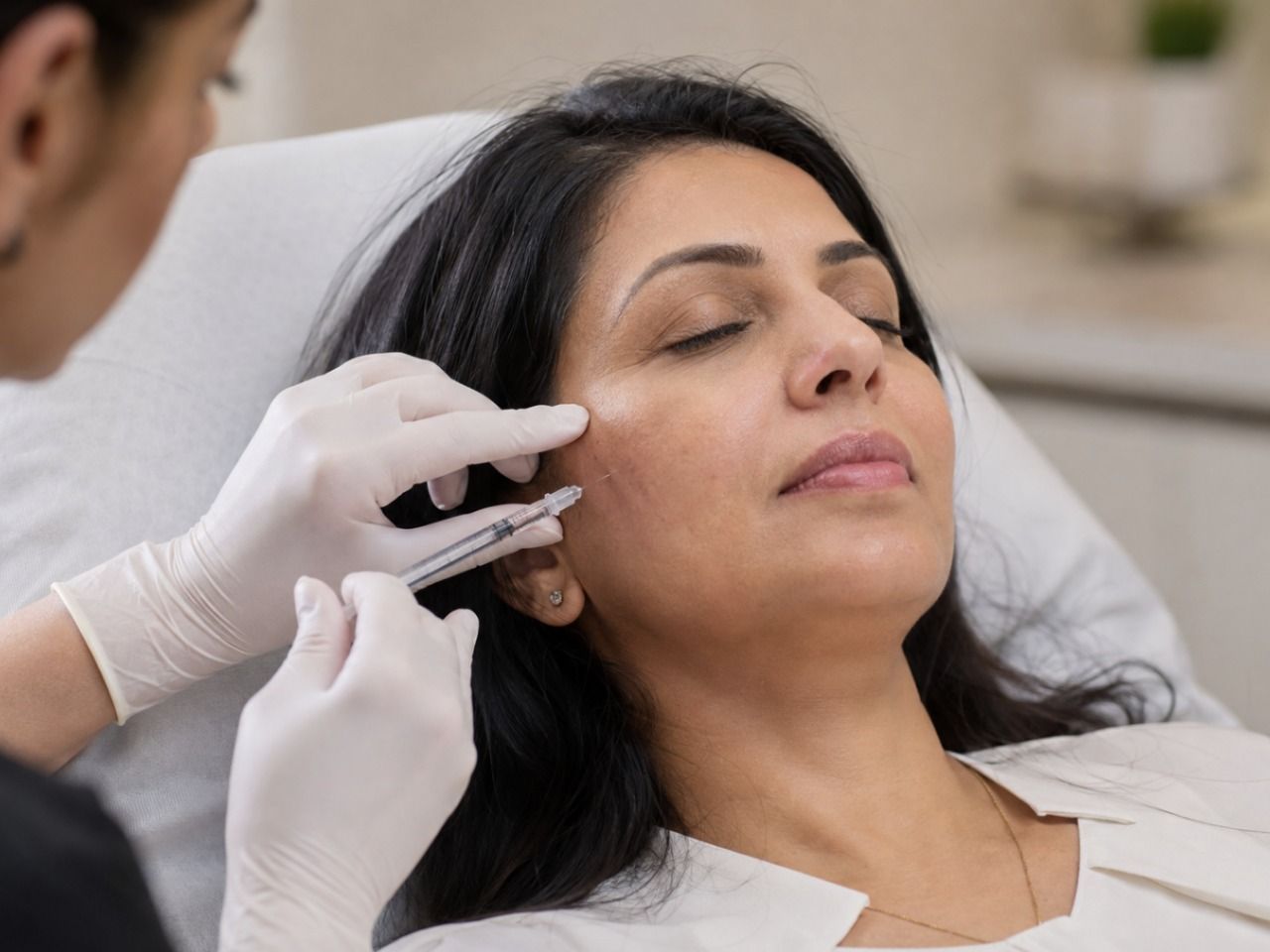
Some patients care less about a specific wrinkle and more about an overall loss of definition.
Changes through the lower face, for example, may make the jawline or surrounding contours appear softer. Structural filler may sometimes help restore support, but filler isn't automatically the answer to every contour concern.
Skin laxity, skeletal structure, fat distribution, and tissue quality can all affect what you see in the mirror. Your provider needs to determine which factor is contributing most before recommending an injectable.
Beyond the Face: Hands, Arms, and Glutes
Radiesse's use isn't limited to the face. It's also used off-label to treat volume loss and skin laxity in the hands, arms, and glutes.
On the hands, it can help restore lost volume that makes veins and tendons more visible. On the arms and glutes, it addresses skin laxity and improves contour. As with facial treatment, the right approach depends on your specific anatomy and goals, something your provider can assess during consultation.
Diluted and Hyperdiluted Radiesse
Radiesse can also be diluted for treatment approaches that emphasize collagen stimulation and skin quality over obvious volume.
The 2019 consensus recommendations for hyperdiluted calcium hydroxylapatite describe CaHA as a face and body biostimulatory agent and outline expert approaches to dilution and treatment across different anatomical areas. The paper also notes the need for further clinical research to strengthen treatment recommendations.
Some uses discussed in medical literature may be off-label, meaning they differ from the specific FDA-approved indications in the product labeling. Your provider should explain when a proposed treatment falls into that category.
Because different fillers behave differently, choosing a product based only on popularity can miss an important part of treatment planning.
Radiesse vs. Hyaluronic Acid Filler
Radiesse and hyaluronic acid fillers can both add volume, but they are not interchangeable.
Hyaluronic acid fillers use a gel-based material and come in formulations designed for different levels of softness, flexibility, and structural support. Radiesse uses calcium hydroxylapatite and is often selected when the treatment plan calls for structure, contour, or a collagen-stimulating effect.
Neither category is automatically better.
| Consideration | Radiesse | Hyaluronic Acid Filler |
|---|---|---|
| Main material | Calcium hydroxylapatite | Hyaluronic acid |
| Immediate volume | Yes | Yes |
| Collagen response | CaHA is used for its biostimulatory properties | Depends on the specific product and tissue response |
| Common treatment goals | Structural support, contour, selected folds, collagen stimulation | Volume, shaping, contour, and treatment of specific facial areas |
| Product selection | Based on anatomy, area, skin, and goals | Based on anatomy, area, skin, and goals |
For someone concerned about looking overfilled, this distinction matters.
A natural result does not simply mean using less product. It means using the right product, in the right location, for a clear reason.
A younger patient may want a very subtle adjustment that preserves existing facial proportions. Someone experiencing more established age-related changes may need a plan focused on replacing support rather than creating extra fullness.
Once a provider determines that Radiesse fits the goal, the consultation helps turn that general idea into a patient-specific plan.
What Happens During a Radiesse Treatment in Grants Pass?
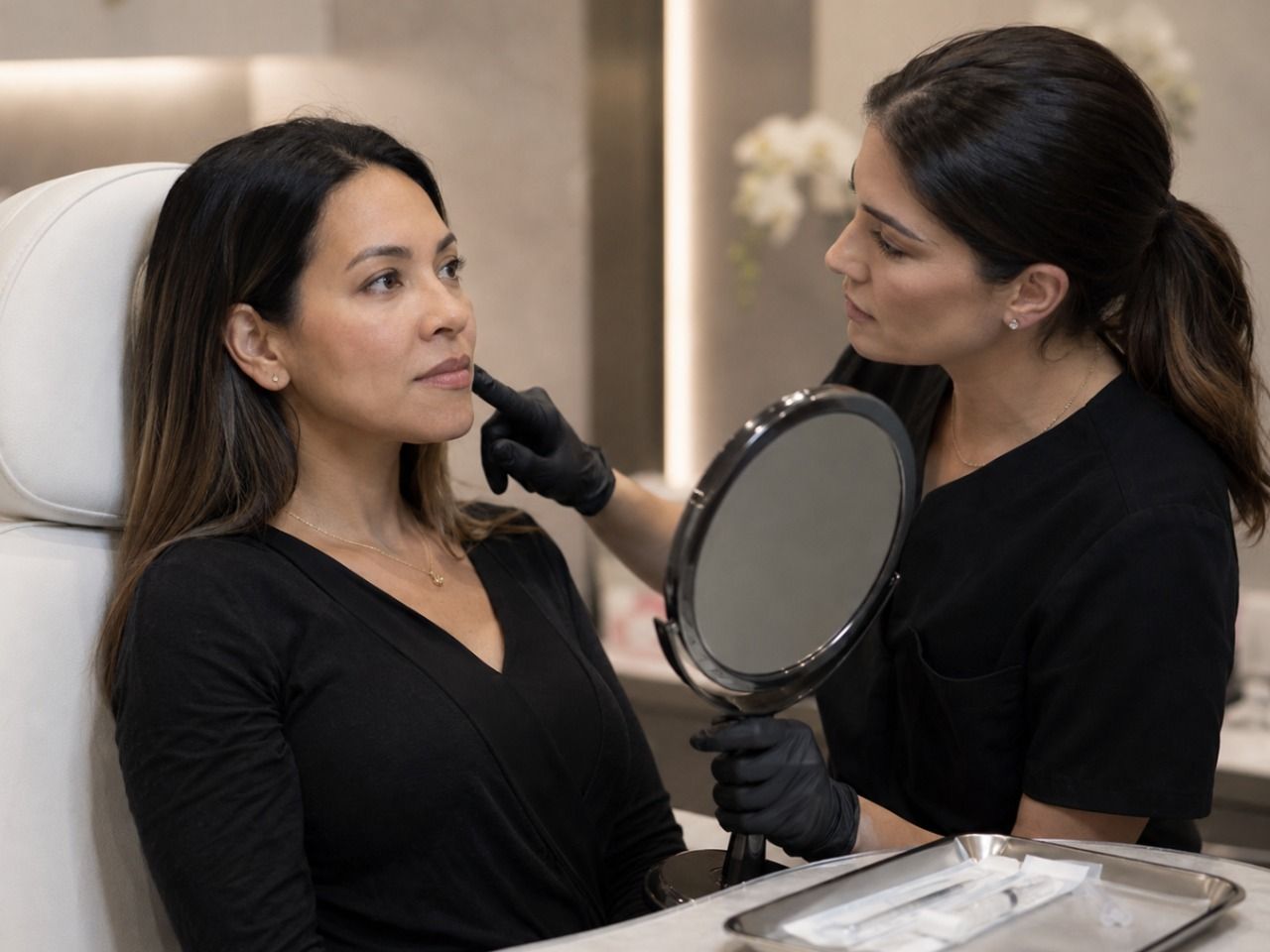
A thoughtful Radiesse treatment starts before the injection itself.
Your Consultation and Treatment Plan
Your consultation gives you time to explain what you notice and what you want to preserve.
Maybe deeper folds are bothering you. Perhaps your lower face seems less defined in photos. You may feel your face looks more tired than it used to, but you may not be sure which treatment would address the cause.
Your provider can assess facial proportions, areas of volume loss, skin quality, movement, and any previous filler placement.
Your medical history matters too. Be prepared to discuss medications, supplements, allergies, previous procedures, and relevant health conditions.
At SOMA, this assessment helps shape a personalized treatment plan. Radiesse may be appropriate on its own, or another option may better address the concern. For some patients, a longer-term plan may include skin tightening, RF microneedling, PDO threads, lasers, another filler, or treatments performed at different stages.
The Injection Process
Your provider prepares the skin before placing the product through carefully selected injection sites.
Where to inject, how much product to use, and which technique is appropriate depend on your anatomy and treatment goals. These decisions require medical knowledge and an understanding of facial proportions.
Some volume or contour change may be noticeable immediately after treatment. Swelling can temporarily change how the area looks, so the appearance immediately after your appointment is not necessarily the final result.
That early change leads to one of the most common questions patients ask: how long will it last?
How Long Do Radiesse Results Last?
Radiesse can create visible support soon after treatment because the injected material provides physical volume.
The collagen-related response develops more gradually. As early swelling settles and the tissue responds, the treated area may continue to change in appearance.
No single duration applies to every patient.
One clinical study examining the longevity of hydroxylapatite facial filler followed 40 patients for up to 18 months and reported favorable patient satisfaction and lasting correction in the study population. It was a relatively small, older study, so its findings should provide context rather than a promise of how long an individual patient's result will last.
Longevity can vary according to:
- The area treated
- The amount of filler placed
- Facial anatomy and movement
- Skin and tissue characteristics
- Injection technique
- Individual biological response
Maintenance also looks different for each person. Some patients may eventually repeat treatment, while others may adjust their aesthetic plan as their face and priorities change.
Duration is worth considering, but safety and appropriate patient selection matter just as much.
Radiesse Side Effects, Downtime, and Safety
Like other dermal filler injections, Radiesse can cause side effects and carries potential complications.
Common local reactions following an injection may include swelling, redness, tenderness, discomfort, bruising, or itching. In some cases, lumps, bumps, or nodules may also develop.
Downtime varies by person and treatment area. Some patients may feel comfortable returning to their usual routine quickly, while swelling or bruising can remain visible for longer.
If you are preparing for a wedding, vacation, professional photos, or another important event, leave enough time between your appointment and the event for common injection site reactions to settle.
Medications and Medical History
Your provider needs an accurate list of medications and supplements before treatment.
Certain medications can affect clotting and may increase bruising or bleeding at the injection site. These can include aspirin and some prescription blood thinners.
Do not stop a prescribed medication on your own to prepare for cosmetic injections.
Talk with the healthcare professional who prescribed it before making a change. Tell your provider about allergies, bleeding problems, an active skin issue near the treatment area, previous filler complications, or other relevant medical concerns.
Patients who are pregnant or breastfeeding should also discuss this with their medical provider because adequate safety information for elective cosmetic injectable treatment may be limited.
Serious Filler Complications
Dermal fillers can also cause uncommon but serious complications.
One important risk is unintended placement of filler into a blood vessel. A vascular complication can interrupt blood flow and damage surrounding tissue. Severe filler complications can require urgent medical assessment.
This is one reason injector selection matters. A qualified medical provider needs a detailed understanding of anatomy and must be prepared to identify unexpected symptoms and respond appropriately.
A good consultation should give you room to discuss these risks as openly as you discuss the aesthetic result.
Who May Be a Good Candidate for Radiesse Filler?
Radiesse may be worth discussing when your concerns involve lost structure, contour changes, selected folds, or interest in collagen stimulation.
A consultation may be helpful if you want to:
- Restore selected areas affected by
volume loss
- Soften appropriate facial folds
- Improve facial contour or structural support
- Explore a collagen-stimulating injectable
- Maintain natural facial proportions
- Avoid an obviously filled appearance
- Develop a longer-term aesthetic plan instead of treating one concern at a time
Interest in Radiesse does not automatically mean it is the right product.
Your provider needs to consider anatomy, skin condition, medical history, medications, previous procedures, treatment area, and expectations. Certain allergies, bleeding conditions, active skin problems, or other health factors may change the recommendation.
It is also important to understand what filler cannot do. Adding volume does not reproduce a surgical lift and cannot correct every type of skin laxity, jowling, texture change, or facial aging.
Sometimes the most useful answer from an experienced provider is that another treatment makes more sense.
That broader perspective is central to SOMA's approach to aesthetic planning.
Natural-Looking Radiesse Results at SOMA

Southern Oregon Medical Aesthetics focuses on enhancement that works with your existing features.
For many patients in Grants Pass and throughout Southern Oregon, looking natural comes first. Younger patients may want subtle changes that photograph well without announcing that they had an injectable treatment. Patients in their 30s and beyond may become more interested in maintaining structure, supporting skin quality, and softening changes as they appear.
Mature patients may notice several concerns happening together, including volume loss, looser skin, texture changes, deeper folds, and reduced definition. Adding filler everywhere is rarely the only possible answer.
SOMA offers Radiesse alongside other injectables, PDO threads, RF microneedling, skin tightening, laser treatments, and other aesthetic services. This gives us room to assess what each concern needs and build a plan over time, instead of expecting one treatment to solve everything.
Artistry matters, but so does honesty. If Radiesse fits your goals, we can explain why. If another approach makes more sense for your face or skin, that should be part of the conversation too.
A few common questions can help you decide what you would like to discuss during your consultation.
Frequently Asked Questions About Radiesse Filler
1. Is Radiesse filler also a collagen stimulator?
Yes. Radiesse provides physical volume after injection, while its calcium hydroxylapatite microspheres are also associated with collagen-stimulating activity.
This combination is one reason providers may consider Radiesse when a patient wants structural support along with a gradual tissue response.
2. How quickly can I see Radiesse results?
Some volume or contour change may be visible soon after treatment.
Swelling can change the early appearance, so the first day isn't the best time to judge your final result. Collagen-related changes occur more gradually and can develop after the initial treatment period.
3. Can Radiesse filler be used for nasolabial folds?
Radiesse has been used to correct facial wrinkles and folds, including nasolabial folds.
The more important question is why the fold looks prominent. Your provider may decide that directly treating the fold is appropriate, or that supporting surrounding facial structure would create a better balance.
4. Can Radiesse cause bruising or swelling?
Yes. Bruising, swelling, redness, tenderness, discomfort, and itching can occur after treatment.
Tell your provider about an upcoming event before scheduling your injections. Even when recovery is relatively short, it is wise to allow time for visible swelling or a bruise to settle.
5. Can I get Radiesse if I take aspirin or blood thinners?
Possibly, but your medical provider needs to review your medications first.
Aspirin and certain blood thinners can increase the chance of bruising or bleeding around an injection site. Never stop a prescribed medication without first speaking with the healthcare professional who manages it.
Your answers to these questions are only part of determining candidacy. An in-person assessment allows the treatment recommendation to account for your anatomy, medical history, and aesthetic goals.
Is Radiesse the Right Filler for Your Goals?
Radiesse filler offers a combination of immediate structural support and calcium hydroxylapatite-based collagen stimulation. For the right patient and treatment area, it may help restore volume, soften selected folds, support facial contour, or support a broader plan for age-related changes.
The product itself is only one part of a good result. Where it is used, how it is placed, and whether it fits your facial structure matter just as much.
If you are considering Radiesse filler in Grants Pass, OR, request a consultation with Southern Oregon Medical Aesthetics. We can discuss what you would like to change, what you want to preserve, and which treatment plan makes sense for your face, skin, and long-term goals.

Joyce Solar
RN - Cofounder/Master Injector
Joyce Solar, RN, is the cofounder and Master Injector at Southern Oregon Medical Aesthetics Center with over 20 years of experience in medical aesthetics. She is an Ultherapy specialist and national clinical educator known for her expertise in facial aesthetic injectables.